

Bench Pressing Through Pain? Why Your Shoulder’s ‘Hidden’ Range of Motion is Sabotaging Your Lifts

Disclaimer: The information provided in this blog is for educational and informational purposes only and does not constitute medical advice. It is not intended to be a substitute for professional medical evaluation, diagnosis, or physiotherapy treatment. Always seek the advice of a qualified healthcare provider or physiotherapist at Destiny Health before beginning any new exercise programme or if you are experiencing pain. If you have an existing orthopaedic condition, consult your specialist prior to attempting any of the assessments or stretches described below.
Walk into any gym, and you will hear a familiar chorus of cues echoing around the bench press stations: "Pinch your shoulder blades!" "Arch your back!" "Keep your chest up!"
These cues are fantastic for protecting your shoulders and creating a stable base. We spend endless hours talking about scapular retraction and external rotation to keep our shoulders safe during heavy pressing movements.
But what if we told you that we are ignoring half of the equation?
There is a 'hidden' range of motion that dictates whether your bench press will feel like a smooth, powerful piston or a grinding, painful struggle. That hidden factor is glenohumeral internal rotation.
If you are experiencing a nagging, pinching pain at the front of your shoulder during chest presses, or if you feel like your strength has inexplicably plateaued, a lack of internal rotation might be the culprit.
Let’s take a deep dive into the anatomy, biomechanics, and physiotherapy perspectives of the glenohumeral joint (GHJ) to understand why internal rotation is your secret weapon for a bigger, safer bench press.
The Glenohumeral Joint: A Quick Anatomical Tour
To understand why internal rotation matters, we first need to look at the architecture of the shoulder.
The shoulder complex is made up of several joints, but the star of the show is the glenohumeral joint (GHJ). This is a classic ball-and-socket joint, where the spherical head of the humerus (your upper arm bone) rests against the shallow glenoid fossa (the socket) of the scapula (your shoulder blade).
Imagine a golf ball sitting on a golf tee. That is roughly the level of bony stability your shoulder has.
Because the socket is so shallow, the joint relies heavily on a complex web of ligaments, joint capsules, and muscles to stay in place. The most critical dynamic stabilisers are your rotator cuff muscles: the supraspinatus, infraspinatus, teres minor, and the subscapularis.
The Role of the Subscapularis and Prime Movers
When we talk about internal rotation - the act of twisting your upper arm inward toward the midline of your body - the subscapularis is the primary rotator cuff muscle doing the heavy lifting. It sits hidden on the underside of your shoulder blade, sandwiched against your ribcage.
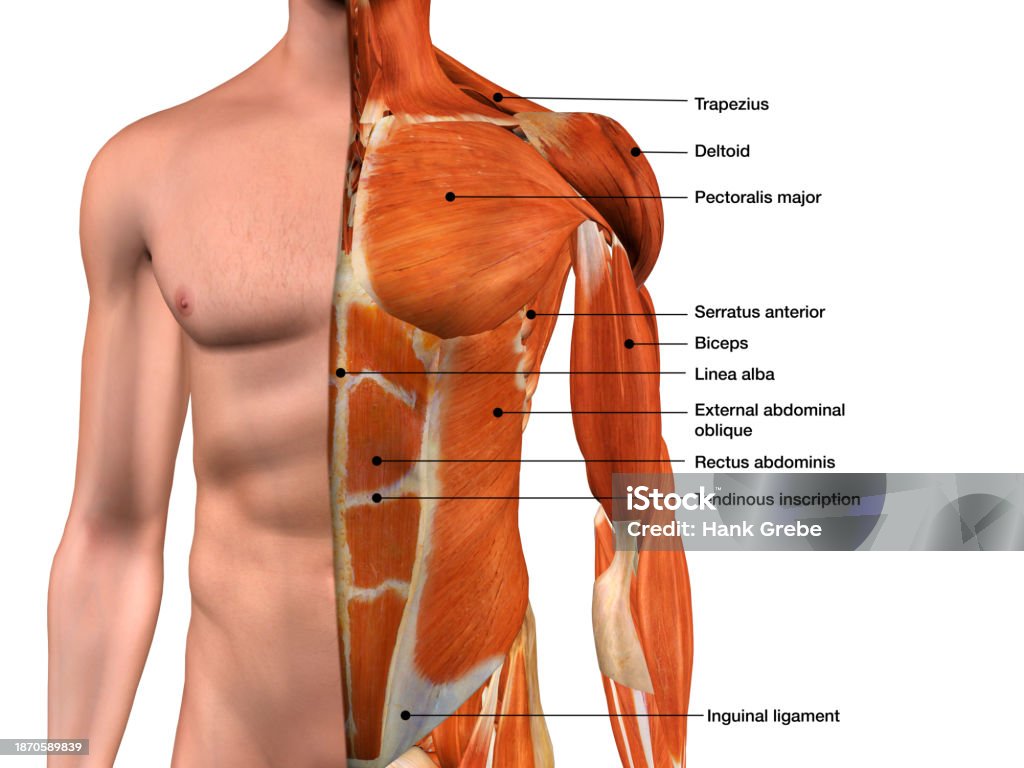
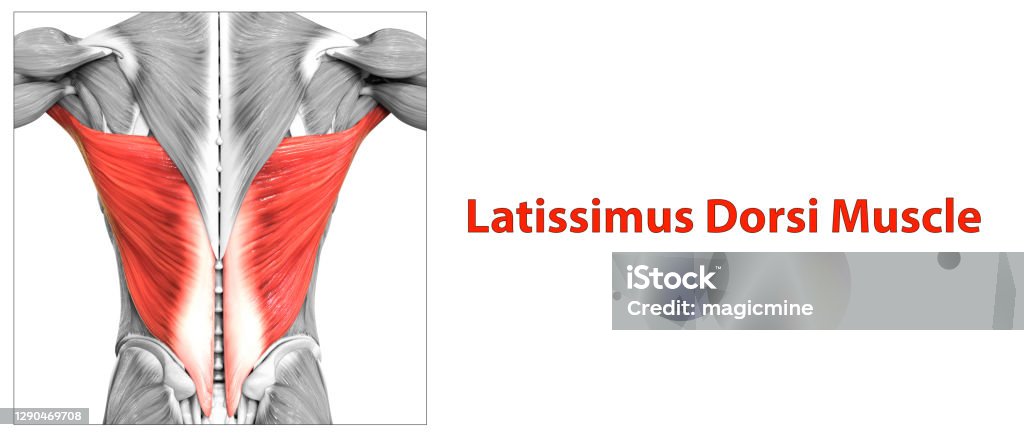
However, the subscapularis doesn't work alone. Your massive prime movers - the pectoralis major (chest) and latissimus dorsi (back) - are also powerful internal rotators.
When you bench press, these massive muscles are firing on all cylinders. But if the joint itself lacks the mechanical freedom to internally rotate, these muscles cannot do their job safely or effectively.
Biomechanics of the Bench Press: Why Internal Rotation is the Missing Link

Many lifters mistakenly believe that the bench press is a pure "pushing" movement that only requires the shoulders to stay pinned back in external rotation. This is a massive biomechanical misconception.
Let’s break down the two phases of the bench press to see what is actually happening at the joint level.
The Descent (Eccentric Phase)
As you lower the barbell to your chest, your humerus goes into extension and horizontal abduction (moving back and out to the sides).
To accommodate this movement while keeping the 'golf ball' securely centred on the 'tee', your shoulder must naturally internally rotate. It is a slight movement, but a critical one.
If your GHJ lacks this internal rotation, the joint runs out of room. The body, being the master compensator that it is, will find that range of motion somewhere else.
The Press (Concentric Phase)
As you drive the bar off your chest, your pecs and lats contract violently. Remember how we mentioned that these muscles are powerful internal rotators?
To produce maximum force, the humerus must be able to internally rotate slightly as it adducts (moves across the chest). This creates a 'spiralling' torque that translates power from your torso straight through your arms and into the barbell.
If your shoulder capsule is stiff and restricts this internal rotation, you leak power. Worse yet, you force the joint into a mechanically disadvantageous position, setting the stage for injury.
The Physio Perspective: Injury Risk and the "Anterior Glide"
From a physiotherapy standpoint, a lack of internal rotation at the glenohumeral joint is a massive red flag for upper body lifters.
When you lack internal rotation, your body compensates. The most common compensation during a chest press is called anterior humeral glide.

What is Anterior Humeral Glide?
Because the humerus cannot naturally spin inward within the socket as you lower the bar, the back of the shoulder capsule acts like a tight bungee cord. It pushes the head of the humerus forward, causing it to glide anteriorly (towards the front of the joint).
When the humeral head glides forward, it crashes into the structures at the front of the shoulder. This includes the biceps tendon, the anterior joint capsule, and the bursa.
This is exactly why so many lifters complain of a sharp, pinching pain at the very front of their shoulder at the bottom of a bench press.
The Cascade of Injuries
Ignoring this biomechanical fault doesn't just stall your progress; it leads to a predictable cascade of injuries:
- Biceps Tendinopathy: The long head of the biceps tendon gets frayed and inflamed from the constant forward pressure of the humeral head.
- Shoulder Impingement: The space under the acromion (the roof of the shoulder) narrows, pinching the rotator cuff tendons.
- Labral Tears: The abnormal shearing forces can gradually tear the glenoid labrum (the cartilage ring that deepens the socket).
- AC Joint Sprains: The altered mechanics place excessive stress on the acromioclavicular joint at the top of the shoulder.
Glenohumeral Internal Rotation Deficit (GIRD)
In the sports medicine and physio world, a severe lack of internal rotation is often referred to as GIRD (Glenohumeral Internal Rotation Deficit).
While GIRD is most commonly discussed in relation to overhead throwing athletes like baseball pitchers or tennis players, it is incredibly prevalent in powerlifters and recreational gym-goers.
Why? Because traditional gym programming heavily biases pushing movements and lat pull-downs, creating massive, tight, and overactive internal rotators (the pecs and lats).
Paradoxically, while these muscles internally rotate the arm, their chronic tightness pulls the shoulder blade out of position and physically limits the true, isolated rotation of the humerus within the socket. The back of the shoulder capsule thickens and tightens in response to heavy pressing, further restricting the joint's ability to move freely.
The Numbers: Average vs. Optimal Range of Motion
So, how much internal rotation do you actually need? Let's look at the clinical benchmarks.
The Average Range
When a physiotherapist measures shoulder internal rotation on a treatment table (usually with the arm abducted out to the side at 90 degrees), a healthy, normal range of motion is generally considered to be between 70 to 90 degrees.
However, "average" gym-goers—especially those who have been bench pressing for years without targeted mobility work—often present with significantly less. It is not uncommon to see lifters who are stuck at 40 or 50 degrees of internal rotation on their dominant side.
The Optimal Range for Lifting
To safely perform heavy chest presses, you don't necessarily need the hyper-mobility of a gymnast.
However, optimal clinical internal rotation for a lifter should sit comfortably around 60 to 75 degrees of true, isolated GHJ movement.
The keyword here is isolated. Many people think they have good internal rotation, but when tested, their shoulder blade aggressively tilts forward (anterior tilt) to fake the movement. True internal rotation requires the shoulder blade to stay pinned flat against the ribcage while the arm bone spins independently.
If you possess a genuine 60 to 75 degrees of internal rotation, your humerus can remain perfectly centred in the socket throughout the entire eccentric and concentric phase of a deep dumbbell chest press or barbell bench press.
How to Test Your Own GHJ Internal Rotation
Before you start aggressively stretching, you need to know your baseline. Here is a simple way to test your internal rotation at home or in the gym.
The Wall Sleeper Test:
- Stand flat against a wall. Your upper back, shoulders, and hips should be in contact with the wall.
- Raise your test arm straight out to the side so it is parallel to the floor (90 degrees of abduction).
- Bend your elbow to 90 degrees, so your fingers are pointing straight up at the ceiling.
- Ensuring the back of your shoulder stays firmly pinned against the wall, slowly rotate your palm down towards the floor.
- The Result: If you can get your forearm roughly parallel to the floor (or within 20 degrees of it) without your shoulder peeling off the wall, you have adequate internal rotation. If you get stuck halfway, or if your shoulder aggressively pops off the wall to make the movement happen, you have a deficit.
Exercises to Safely Improve GHJ Internal ROM
If you have discovered a deficit, it is time to get to work (see your physio for support!)
Improving internal rotation isn't about aggressively yanking your arm into painful positions. The joint capsule is delicate, and forcing it can cause the very impingement we are trying to avoid.
Here are three safe, highly effective exercises we utilise at Destiny Health to restore optimal glenohumeral internal rotation.
1. The Modified Sleeper Stretch: Gentle capsule release.
The traditional sleeper stretch can sometimes pinch the front of the shoulder. The modified version fixes this by changing the angle of your torso, ensuring a safe stretch deep in the posterior capsule.

- Lie on your side with your bottom arm extended straight out in front of you on the floor.
- Roll your torso slightly backward (about 20-30 degrees) toward your back. This slight roll clears the shoulder blade and prevents impingement.
- Bend the elbow of the bottom arm to 90 degrees so your fingers point at the ceiling.
- Using your top hand, gently push the wrist of the bottom arm down toward the floor.
- Stop when you feel a deep, dull stretch in the back of the shoulder. If you feel a pinch in the front, roll back slightly further.
- Hold for 30–45 seconds, breathing deeply. Perform 2-3 sets per side.
2. Dumbbell wall rotations: Targeting the posterior cuff and capsule.

Setup & Scapular Pinning: Positioning in the Scapular Plane.
- Stand side on to a smooth wall with your working side facing toward it.
- Place the back of your shoulder blade (scapula) firmly against the wall or wall edge.
- Abduct your arm to roughly 90 degrees and bring it 30 degrees forward off the frontal plane into the scaption plane.
- Bend your working elbow to a rigid 90-degree angle.
- Lightly hold a small dumbbell (1–3 kg max) in your working hand with a neutral grip.
Eccentric Lowering.
- Keep your shoulder blade pinned against the wall to ensure no compensation occurs.
- Slowly allow gravity and the weight of the dumbbell to pull your forearm downward toward the floor (internal rotation).
- Focus on keeping the movement entirely within the shoulder socket - do not let the front of your shoulder pop forward off the wall.
- Lower the dumbbell until you feel a deep, comfortable stretch at the back of the shoulder joint.
- Hold the bottom position for 2–3 seconds.
Active Internal Rotator Concentric Drive: Concentric Return Phase.
- Rotate your shoulder back to the starting position so that the dumbbell is back up to the starting position (forearm parallel to the floor or perpendicular to the torso).
- Maintain a steady, smooth tempo: 3 seconds down, 2-second hold at the bottom stretch, 2 seconds up.
- Perform 2–3 sets of 10–12 controlled repetitions as part of a warm-up or mobility protocol.
Conclusion: Don't Let Poor Mobility Bench Your Progress

The bench press and chest press are phenomenal exercises for building upper body strength, muscle mass, and bone density. However, they are highly demanding on the intricate mechanics of the shoulder joint.
If you continually force your shoulders through heavy ranges of motion without the requisite internal rotation, your body will eventually hand you the bill in the form of anterior shoulder pain, impingement, or a stubborn plateau.
By taking the time to test your mobility, understand the biomechanics of your joints, and incorporate targeted stretches like the modified sleeper and cross-body stretch into your routine, you can keep your shoulders healthy and your pressing numbers moving in the right direction.
Are you struggling with shoulder pain during your workouts?
Don't push through bad pain. At Destiny Health, our team can accurately assess your biomechanics, identify hidden deficits like limited internal rotation, and build a customised rehabilitation plan to get you back under the bar safely.
Book an assessment with us today, and let’s unlock your full training potential!