

Imagine if the greatest medical challenge of our time - a disease that claims nearly 10 million lives every year - wasn't a genetic lottery, but a metabolic glitch. What if the 'war on cancer' has been failing because we’ve been fighting the wrong enemy?

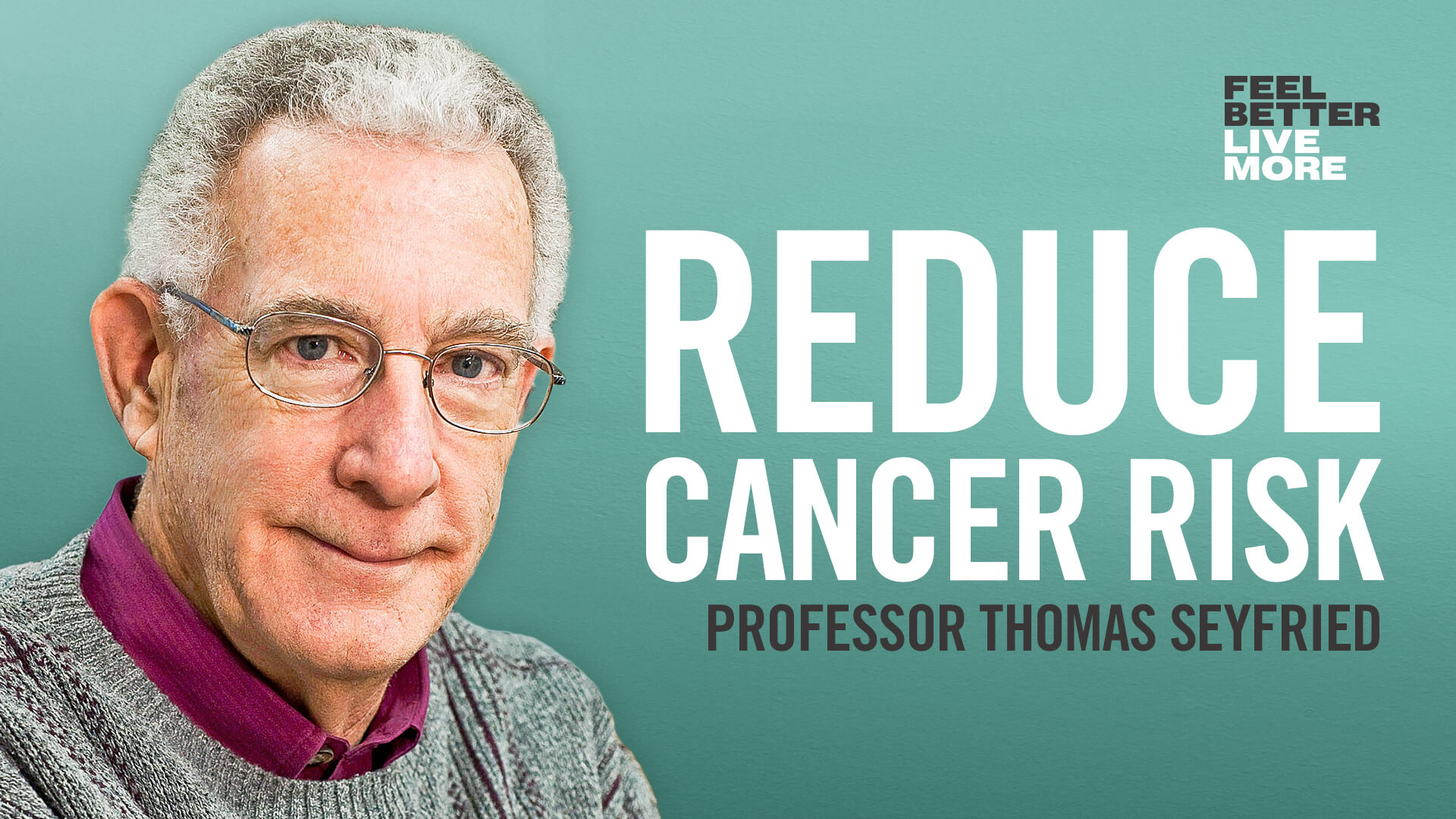
In the quiet halls of Boston College, Professor Thomas Seyfried is leading a revolution that is as controversial as it is compelling. For decades, the world has been told that cancer is a disease of 'broken' DNA - a series of random mutations that cause cells to grow out of control. But Dr Seyfried, a Professor of Biology with over 190 peer-reviewed publications, suggests a different story.
He argues that cancer is a metabolic disease. It isn't a failure of the nucleus (the cell’s command centre), but a failure of the mitochondria (the cell’s power plants). This shift in perspective changes everything: how we treat it, how we prevent it, and why the pharmaceutical industry might not be in a hurry to hear his message.
At Destiny Health, we believe in empowering you with the latest education on health and longevity. Today, we’re diving deep into the world of Dr Thomas Seyfried, the Metabolic Theory of Cancer, and the uphill battle of a scientist who dared to challenge a multi-billion-dollar status quo.
-
Note: This article is for general public education and informational purposes only. The information herein is not intended as medical advice. Cancer is a complex and life-threatening condition. Our audience should always work closely with their physician or oncology team before making any changes to their treatment or diet.*
The Warburg Legacy: Where It All Began
To understand Seyfried, you have to understand Otto Warburg. In the 1920s, the Nobel Prize-winning German physiologist noticed something strange: cancer cells, regardless of their origin, seemed to have a 'broken' way of making energy.
While healthy cells use oxygen to efficiently burn fuel (respiration), cancer cells revert to a primitive process called fermentation. They crave glucose (sugar) and glutamine (an amino acid) and ferment them to survive, even when oxygen is plenty. This is known as the Warburg Effect.
Dr Seyfried has taken this baton and run with it. He argues that the genetic mutations we see in cancer are not the cause of the disease, but the result of damaged mitochondria. In his view, when a cell’s power plant breaks, the cell starts 'screaming' for energy via fermentation, and the resulting chemical chaos damages the DNA.
The takeaway? If you target the DNA (chemo/radiation), you’re treating a symptom. If you target the fuel (glucose and glutamine), you’re treating the source.
The 'Catchy' Controversy: The David vs Goliath of Oncology
If Dr Seyfried’s theory is correct - and his research, including successful animal models and human case studies, suggests it holds significant weight - why hasn't the medical world shifted?
The answer is a complex web of politics, finance, and the slow-moving gears of academic publishing.
1. The Financial Firewall
The current Standard of Care (SOC) for cancer: surgery, chemotherapy, and radiation, is a global industry worth hundreds of billions of dollars. Most modern cancer research is funded by pharmaceutical companies looking for the next 'blockbuster drug' that can be patented and sold.
Dr Seyfried’s primary 'medicine' is Ketogenic Metabolic Therapy (KMT) and fasting. You cannot patent a ketogenic diet. You cannot put a price tag on a 48-hour fast. Because there is no massive profit margin in telling people to eat high-quality fats and restrict carbohydrates, the funding for large-scale clinical trials is virtually non-existent. Seyfried has frequently spoken about the struggle to find grants for research that doesn’t involve a patentable molecule.
2. The Publishing Struggle
In the world of science, 'publish or perish' is the rule. However, when your findings suggest that the dominant theory (the Somatic Mutation Theory) is flawed, getting into top-tier journals becomes a battle.
Seyfried has documented years of pushback from reviewers who are often the very scientists whose careers are built on the genetic model of cancer. This 'intellectual gatekeeping' means that metabolic research often takes twice as long to reach the public eye, even when the data is reproducible and rigorous.
3. The Political Pushback
Mainstream oncology is a rigid structure. For a doctor to recommend a ketogenic diet over chemotherapy isn't just a choice, it’s a legal risk. The 'Standard of Care' is a legal shield; deviating from it can lead to losing a medical licence or facing malpractice suits. This creates a political environment where innovation is stifled by the fear of litigation and the loss of institutional funding.

Metabolism, Keto, and the Fitness Connection
So, what does this look like in practice? Dr Seyfried advocates for a 'Press-Pulse' strategy.
-
The Press: This is the constant pressure of a restricted ketogenic diet. By lowering blood glucose and elevating ketone bodies, you create a metabolic environment where healthy cells thrive (because they can burn ketones) but cancer cells struggle (because they cannot).
-
The Pulse: This involves strategic, non-toxic stresses like targeted drugs (that block glutamine) or hyperbaric oxygen therapy, which 'pulse' the weakened cancer cells until they die.

The Role of Fitness
This isn't just about what you eat; it’s about how your body processes energy. Fitness training is a critical component of metabolic health. Exercise increases insulin sensitivity, meaning your body needs less insulin to manage blood sugar.
High insulin is like 'miracle-gro' for many tumours. By training your body to be metabolically flexible - able to switch between burning sugar and burning fat - you are essentially 'fireproofing' your cellular environment. Dr Seyfried’s work suggests that maintaining low inflammation and high mitochondrial health through movement is one of our best natural defences.

Why This Matters for You
You might be thinking, "I don't have cancer, why should I care about Professor Seyfried?"
The reality is that metabolic health is the foundation of all health. The same mitochondrial dysfunction that Seyfried links to cancer is also at the heart of Type 2 diabetes, Alzheimer’s (often called 'Type 3 diabetes'), and cardiovascular disease.
By adopting a lifestyle that prioritises metabolic health, you are doing more than just 'getting fit.' You are optimising the very engines that keep you alive.
Practical Steps for Metabolic Health (The Seyfried Approach):
-
Monitor Your GKI: Seyfried developed the Glucose Ketone Index (GKI). It’s a simple ratio of your blood sugar to your ketone levels. A low GKI indicates your body is in a therapeutic metabolic zone. You can discuss this with your physician.
-
Ditch the Refined Carbs: Sugar and processed grains are the primary drivers of high blood glucose. Talk to your doctor about including more naturally occurring produce.
-
Prioritise Mitochondrial Health: This means getting enough sleep, managing stress, and engaging in regular resistance and aerobic training.
-
Consider Intermittent Fasting: Giving your digestion a break allows your body to clear out damaged cells (a process called autophagy). Your physician can discuss this with you for context and guide you through it.
A Word of Caution: The Importance of Your Doctor
While Dr Seyfried’s work is groundbreaking, it is vital to remember that biology is not a DIY project, especially when it comes to serious illness.
At Destiny Health, we urge you to take this information to your GP or specialist. Ask them:
"What is my metabolic health like? How can we work together to optimise my nutrition alongside my medical treatment?" True health is found in the synergy between cutting-edge science and professional medical guidance.
The Future of the Revolution
Professor Thomas Seyfried isn't just a scientist; he’s a pioneer. Despite the financial hurdles and the cold shoulder from the pharmaceutical industry, the metabolic movement is growing. From podcasts to international conferences, people are waking up to the idea that we have more control over our health than we were led to believe.
The 'Forbidden Fuel' - the glucose that feeds the modern world's chronic diseases - can be tamed. And while the battle for the 'Metabolic Theory' continues in the labs and the journals, the battle for your health happens every day in your kitchen and at your local gym.
Ready to take control of your metabolic health?
Browse our other blogs at destinyhealth.com.au/blogs to learn more about keto-friendly recipes, the best fitness routines for longevity, and how to build a body that’s built to last.
References & Further Reading:
-
Seyfried, T. N. (2012). Cancer as a Metabolic Disease: On the Origin, Management, and Prevention of Cancer.
-
The Warburg Effect: Understanding the Metabolic Signature of Cancer.
-
The Glucose Ketone Index (GKI): A Tool for Monitoring Therapy.
Disclaimer: The content provided by Destiny Health is for educational purposes only and does not constitute medical advice, diagnosis, or treatment. Always seek the advice of your physician or other qualified health provider with any questions you may have regarding a medical condition.